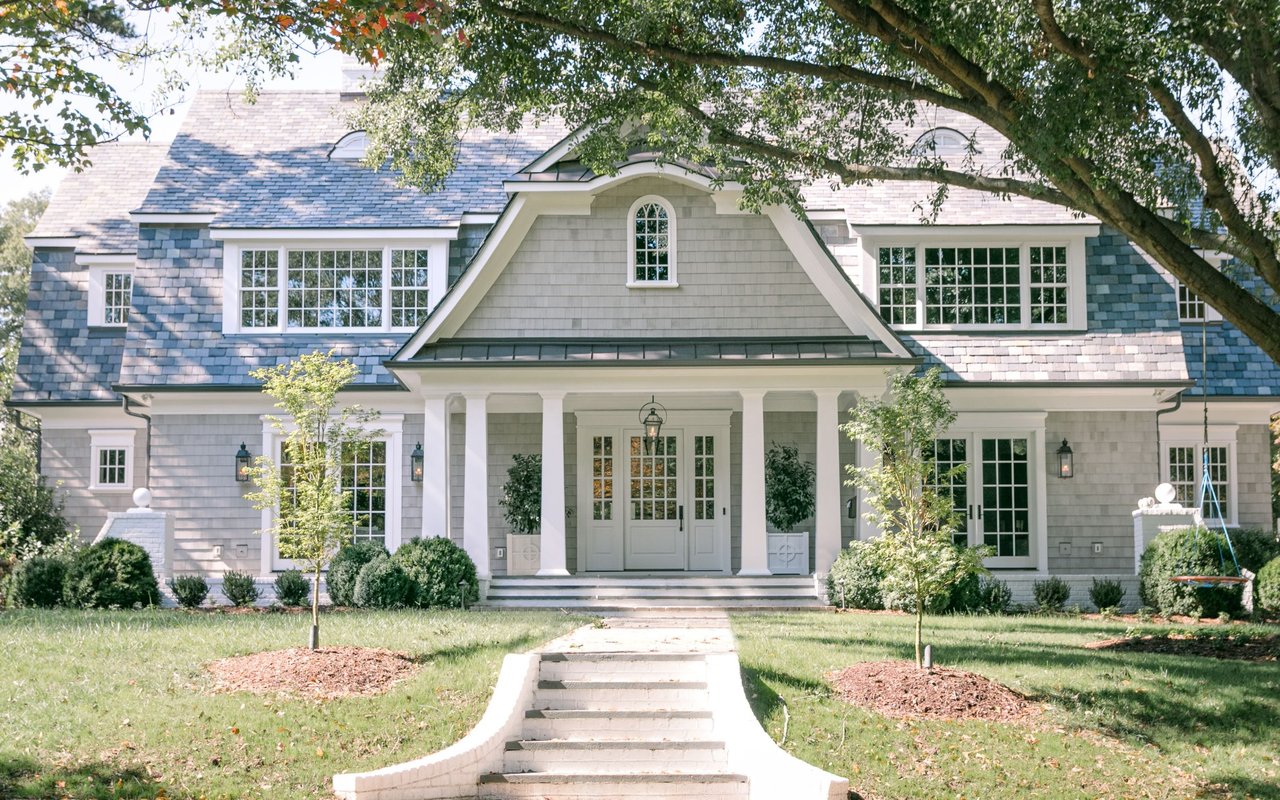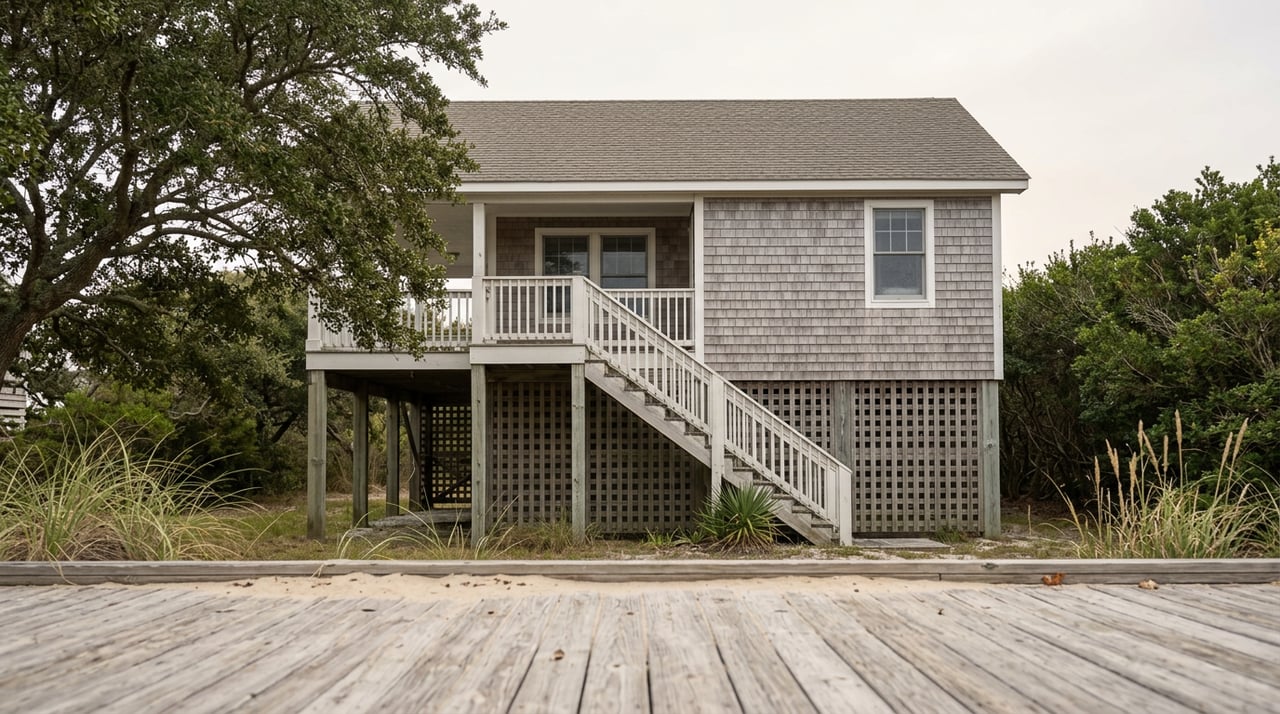
Two cottages sit four doors apart on the same street in Duck. Same lot depth, same year built, same recent kitchen remodel with the same granite and the same stainless package. One lists on the rental market as a six-bedroom and books solid all summer at a premium weekly rate. The other, despite having what the owner insists are six actual rooms with beds in them, is marketed and taxed as a four-bedroom.
The gap between those two houses is not the view, the deck, or the hot tub. It is a piece of paper filed decades ago at Dare County Environmental Health, and it is quietly setting the revenue ceiling on one of those homes right now.
The Number That Actually Sets Your Rental Ceiling
Duck sits in Dare County, where an estimated 90 percent of homes rely on private septic systems rather than municipal sewer, and North Carolina does not size those systems by square footage, bathroom count, or how many people a listing claims a house "sleeps." According to Septic and Well, the state sizes them by bedrooms, full stop. A local health department evaluates the soil, decides how many gallons of wastewater the ground can absorb in a day, and then converts that number into a legal bedroom count on the permit. That count assumes two occupants per bedroom, and it becomes the actual ceiling on how the house can be advertised and rented, regardless of how many beds are physically in the rooms upstairs.
The North Carolina Real Estate Commission has spent more than a decade telling its own licensees this in plain language: occupancy is calculated by multiplying the septic permit's bedroom count by two, and claiming a property "sleeps 12" because it has six sets of bunks is a misrepresentation if the permit only supports four bedrooms. The commission has disciplined brokers over exactly this gap between what a house looks like and what its permit says it is.
For a buyer comparing two Duck cottages that look identical from the street, the permit is the tiebreaker nobody puts in the listing photos.
What Two People Per Bedroom Actually Costs You in July
The reason this detail matters so much on the Outer Banks, more than it might in a landlocked suburb, is that bedroom count here is almost a direct multiplier on annual income. The nearest hard numbers come from neighboring Kitty Hawk, where market data as of April 2026 showed studios earning roughly $32,657 a year in gross short-term rental revenue, four-bedroom homes earning about $74,426, and homes with six or more bedrooms earning $156,835. That is not a modest step up for each additional room. It is a curve that bends sharply upward the more legal bedrooms a house carries.
| Bedroom count | Approximate annual gross revenue |
|---|---|
| Studio | $32,657 |
| 4 bedrooms | $74,426 |
| 6+ bedrooms | $156,835 |
Figures reflect Kitty Hawk short-term rental market data as of April 2026, the closest comparable town-level dataset available for the northern beaches.
Larger oceanfront homes in Duck and Corolla specifically have been reported to clear $150,000 to $200,000 or more in strong years, according to a 2026 market breakdown of Outer Banks rental performance. The pattern holds across the northern beaches: a bigger legal bedroom count does not just add a little income at the margin, it changes which revenue tier the property competes in.
Which means the permit sitting in a county file cabinet is not paperwork. It is the variable most directly tied to what the house can earn.
The 1980s Permit Hiding Behind the 2020s Listing
As Island Contractors OBX notes, Duck's older cottages, the ones platted and built when the town was still mostly a scattering of family retreats rather than the shopping and dining district it is today, were permitted under septic rules that have since been rewritten. North Carolina overhauled its statewide septic regulations effective January 1, 2024, the most significant update to the rules in 34 years, changing how soil is evaluated and how systems are designed and permitted going forward. Older Duck lots permitted long before that overhaul were sized to the standards and the family sizes of their era, not to the six-bedroom rental expectations of today's booking platforms.
Small, older beach lots often do not have the physical room for a larger drain field even if an owner wanted to expand one. Health departments frequently designate a repair area on the original permit, land set aside for a future replacement system, and building a pool or a shed over that reserved space is a common way owners accidentally box themselves in before they ever think about adding a bedroom.
State regulators are still actively working through legacy septic issues on Dare County's beachfront specifically. The Coastal Resources Commission's work on oceanfront septic failures was sidelined in 2023 during a broader rules review, picked back up once related dune protections were restored in 2025, and was still unsettled as of March 2026, when the commission paused further rule changes to bring the health department and other stakeholders back to the table. The point for a Duck buyer is not the storm exposure itself. It is that the regulatory ground under these permits keeps shifting
The Den You Cannot Just Call a Bedroom
Buyers sometimes assume they can quietly convert a home office, a bonus room, or a loft into a fifth or sixth bedroom to chase that Kitty Hawk-style revenue curve. The math does not work that way. State guidance puts septic design flow on a per-bedroom basis, so a fourth bedroom does not add a little capacity, it can add close to a third more daily flow than a three-bedroom system was ever designed to handle. If the existing system cannot absorb that, a paint job and a listing update will not solve the problem.
What This Means at the Closing Table
For a buyer, the practical move is simple and specific: ask for the property's Improvement Permit or Operation Permit from Dare County Environmental Health before assuming a house's advertised bedroom count is its legal bedroom count. If the permit cannot be located, and on older Duck properties it sometimes cannot, that gap becomes something to work through with the seller and the health department rather than something to guess past.
The stakes are not only about a rental brochure. Brokers carry real exposure here. North Carolina REALTORS explains that state law prohibits a licensee from continuing a negligent misrepresentation through advertising, and the Real Estate Commission has made clear that agents have a duty to take reasonable steps to verify property data, including the number of legal bedrooms, before it goes into a listing or a sales disclosure. That duty exists precisely because the bedroom count on a septic permit, not the one a buyer counts walking through the house, is what the law treats as real.
None of this makes an older Duck cottage a bad buy. It makes the permit itself one of the most useful documents in the file, right alongside the survey and the tax card, because it tells you what the house is actually allowed to be, not just what it currently looks like.
A Few Questions Worth Asking Before You Write an Offer
Can I still buy a Duck property if the original septic permit is missing? Yes, but treat it as a research task rather than a formality. The health department can often make a determination through a new inspection, and in the meantime tax records showing a lower bedroom count than the listing can be a useful early signal of what the permit likely says.
Does upgrading to a larger septic system guarantee higher rental income? It removes a ceiling, it does not guarantee anyone climbs to it. A larger permitted bedroom count opens the door to marketing more bedrooms and competing in a higher revenue tier, but occupancy, condition, and location still do the rest of the work.
Is this only a concern for very old cottages? Not entirely. Any home on an individual septic system, regardless of age, is bound by whatever bedroom count its current permit states. Newer construction is less likely to have a mismatch, but any renovation that adds a bedroom, even a converted den, needs to be checked against the permit before it gets called anything on a listing.
If you are weighing a Duck rental property and want someone who has spent years on the operating side of vacation rentals, not just the sales side, to help you read a septic permit alongside a proforma, Corolla Real Estate can walk through both with you before you write an offer.
This article is general information, not legal, tax or financial advice. Consult a qualified professional about your situation.