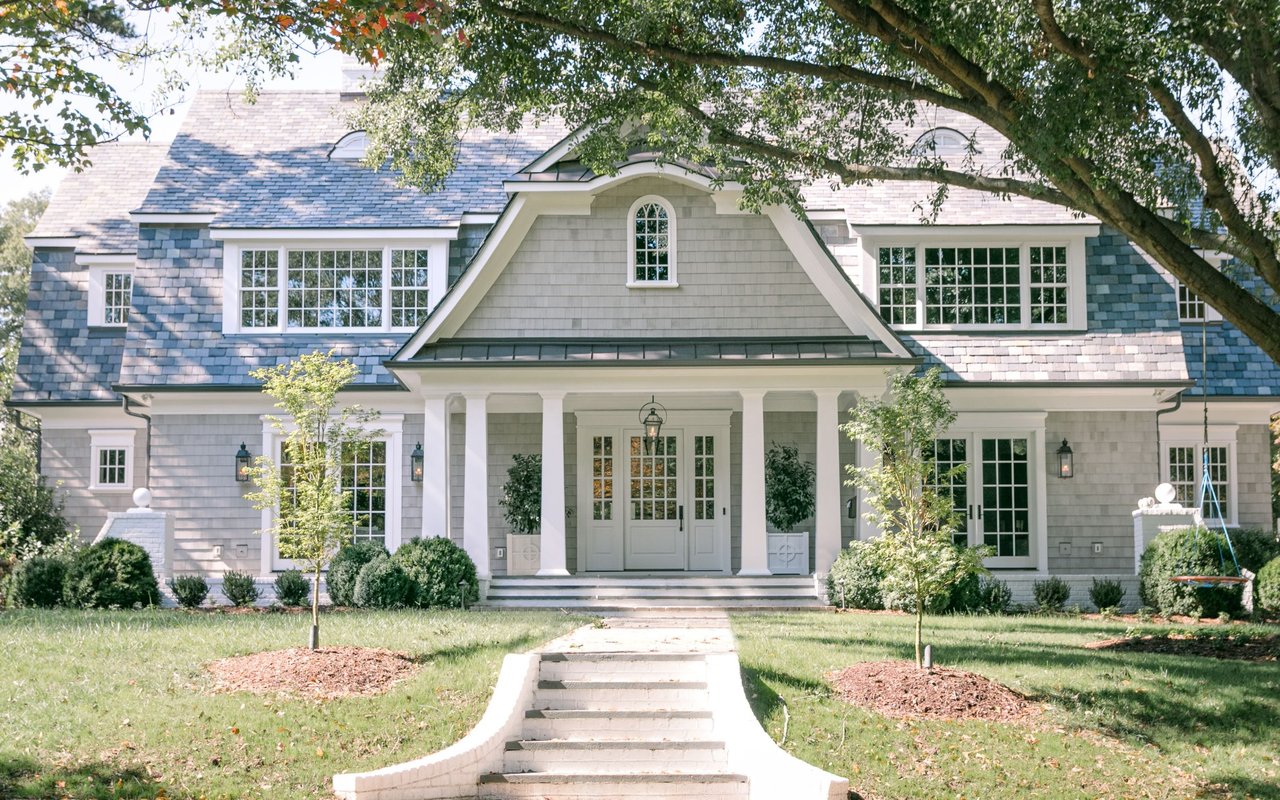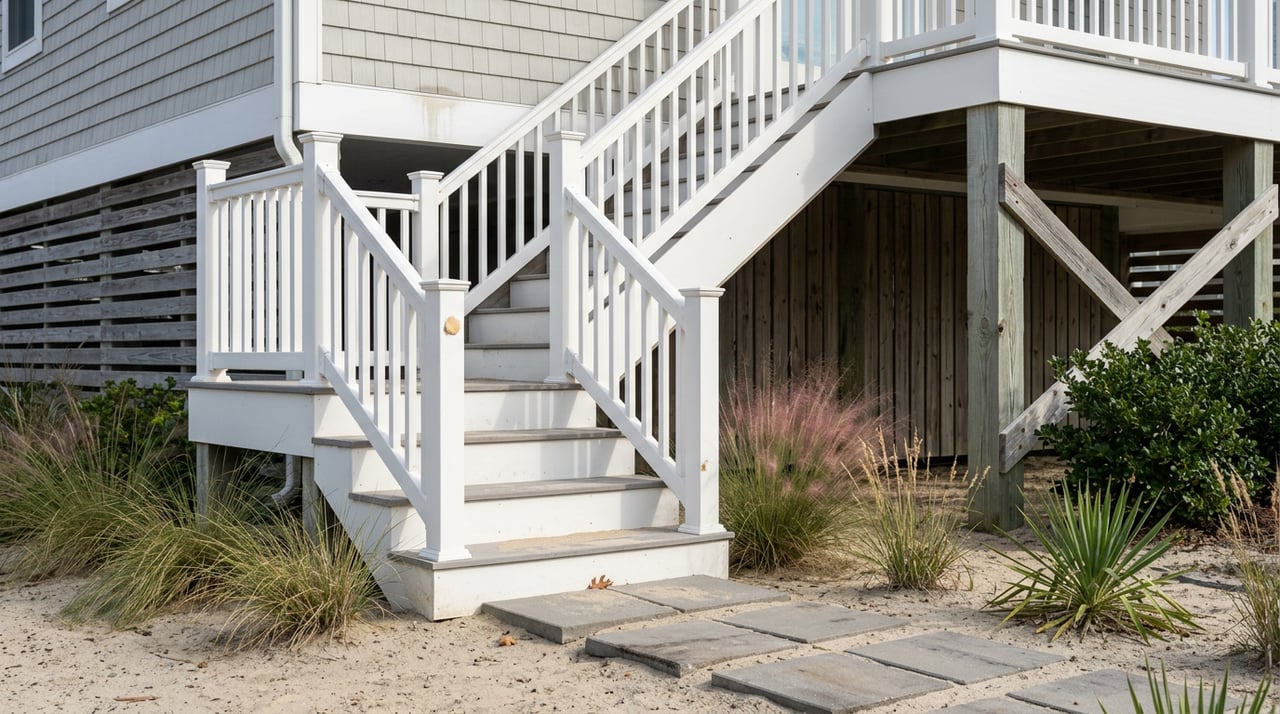
A buyer falls for a listing photo of a house on stilts at the edge of the Atlantic, framed by a wild horse grazing in the yard, and three weeks before closing their loan officer asks for a document that doesn't exist. The document is a maintenance agreement for a street that is, technically, sand. Nobody mentioned this at the open house. Nobody put it in the listing description. It surfaces in underwriting, at the exact moment a buyer has already picked out furniture, and it is the single most predictable snag in buying property north of where the pavement ends in Corolla.
The easy story about Carova and the other 4x4 communities, Swan Beach, North Swan Beach, and Penny's Hill, is that they're the cheaper, wilder version of Corolla. Lower price per square foot, more privacy, wide open beach, and the famous Colonial Spanish Mustangs wandering between houses. That story is true as far as it goes. It just isn't the whole mechanism. The real difference between buying on the paved side of Corolla and buying past the 4x4 ramp isn't the horses or the sand. It's what happens the moment a lender opens the file.
The Document a Sand Road Can't Produce
Conventional mortgages sold to Fannie Mae carry a specific requirement: a legally enforceable agreement or covenant covering maintenance of the street serving the property, according to Fannie Mae's own Selling Guide. That requirement was written for private roads generally, gravel lanes in the mountains, shared driveways in subdivisions. It was not written with an 11-mile beach in mind, but it applies just the same, and a beach has no maintenance covenant because nobody maintains it. The tide does the grading.
Freddie Mac offers more room. Under its Guide, a loan can qualify without a signed maintenance agreement if there's a permanently recorded easement granting ingress and egress to the property, a lower bar that a lot of Carova parcels can clear with existing deed language. That distinction, Fannie's strict document versus Freddie's easement workaround, is the first fork in the road for anyone trying to finance a 4x4 area purchase conventionally.
It's also why the buyer pool up there skews so heavily toward cash. Not because buyers up there are wealthier as a rule, but because a maintenance-agreement requirement that a sand track cannot satisfy quietly filters out a chunk of otherwise qualified borrowers before they ever get an appraisal scheduled.
Why the Expensive Houses Fall Into It Anyway
Here's the part that surprises even buyers who did their homework on Fannie versus Freddie. A lot of the most desirable inventory north of the pavement, the oceanfront and semi-oceanfront homes with the highest rental potential, prices well above the conforming loan limit, which sits at $832,750 for most single-unit properties in 2026 and $1,249,125 in high-cost areas. Once a purchase price pushes a loan into jumbo territory, Freddie Mac's easement flexibility mostly stops mattering, because jumbo loans are underwritten by private investors, not the government-sponsored enterprises, and those investors are far more risk-averse about collateral. Nearly every jumbo investor wants the full signed, recorded maintenance agreement regardless of what Freddie would otherwise accept.
That's the trap. A buyer chases the highest-value, highest-rental-yield house in the 4x4 area, the exact kind of property this brand's investor clients look for, and the price tag alone routes them into the loan category least forgiving of the area's defining feature: no paved, maintained road. The workaround for most of these buyers isn't a better mortgage application. It's a cash offer, or a portfolio lender comfortable holding the loan instead of selling it.
The Insurance Layer Nobody Budgets For
Financing is only half the mechanism. The other half shows up in the insurance quote, and it traces back to a federal law from 1982.
The Coastal Barrier Resources Act designated certain undeveloped and sparsely developed coastal barrier segments, including stretches of the northern Outer Banks in Currituck County near Corolla, as areas where the federal government would no longer subsidize development through programs like the National Flood Insurance Program. Properties inside a CBRA unit cannot buy NFIP flood coverage under any circumstances, full stop, according to a coastal insurance review of NFIP-ineligible zones in eastern North Carolina. Given that the whole identity of the 4x4 communities north of Corolla is exactly the kind of sparse, unpaved, undeveloped barrier stretch the law was written to describe, a meaningful share of that inventory sits inside a CBRA boundary. The precise line runs parcel by parcel and is worth confirming before a buyer writes an offer, but the pattern holds broadly enough that it should be assumed, not discovered.
For a property inside a CBRA unit, the only path to flood coverage is the private market, admitted carriers or surplus lines, since NFIP is off the table entirely. That market has grown since 2020, but it still means a different shopping process, a different premium structure, and for federally backed loans, a lender that has to confirm a qualifying private flood policy before the loan can close at all. Buyers who assume they'll just get a standard flood policy the way they would in a paved subdivision are the ones who discover the CBRA wrinkle at the worst possible time, usually from a lender's conditions letter with a tight clock attached.
Compare that to the paved side of Corolla, where flood coverage typically routes through NFIP without the CBRA complication, a simpler shopping process with a federal backstop instead of a private-only market. Wind and hail, statewide, run through the North Carolina Insurance Underwriting Association's Coastal Property Insurance Pool as the market of last resort when private wind carriers won't write a policy, a structure spelled out in North Carolina's insurance statutes. That pool exists for the whole beach and coastal area, paved or not, but it's one fewer variable a paved-side buyer has to reconcile compared to someone budgeting for private flood coverage on top of everything else.
Paved Corolla vs. the 4x4 Area, Side by Side
| Paved Corolla | 4x4 area (Carova, Swan Beach, North Swan Beach, Penny's Hill) | |
|---|---|---|
| Road access | Maintained public roads | Beach only, no pavement, 11 miles of sand from the ramp to the Virginia line |
| Conventional financing | Standard maintenance-agreement paperwork usually satisfied | Fannie Mae's street-maintenance requirement is hard to meet, Freddie Mac's easement path is workable until price pushes the loan into jumbo territory |
| Flood insurance | Typically NFIP-eligible | Often inside a CBRA unit, NFIP unavailable, private flood market only |
| Beach driving permit | Not applicable | No permit required to drive, but a county parking permit is required in season |
| Vehicle requirement | Any standard car | True 4WD with low-range gearing, AWD is not sufficient |
The Vehicle Is Its Own Line Item
Getting to a house in the 4x4 area isn't a detail, it's an operating cost. The pavement on NC-12 ends at the northern edge of Corolla, and from that ramp it's roughly 11 miles of sand to the Virginia state line, a border that's fenced, so there's no exit that way. The drive from the ramp to central Carova runs 30 to 45 minutes at low tide in a properly equipped vehicle, and 60 to 90 minutes when the tide or sand conditions are working against you.
A true 4WD vehicle isn't optional. Locals who live up there year-round tend to drive:
- Toyota 4Runner or Land Cruiser
- Ford F-150 or F-250 4x4
- Jeep Wrangler, four-door
- Ford Bronco
- Full-size Chevrolet or GMC 4x4 trucks
Budget $35,000 to $65,000 for a properly equipped vehicle, and treat it as its own depreciation schedule, not an afterthought. Salt air and sustained beach driving accelerate wear on undercarriage components and brake lines, so the rinse-after-every-drive routine and more frequent brake inspections than a mainland vehicle needs are part of the real cost of ownership, not a footnote.
None of that touches driving permits, because Currituck County requires none to drive the 4x4 beach. It's parking that's regulated. For 2026, a county beach parking permit is required from the second Saturday of May, May 9, through the last Saturday in September, September 26, capped at 300 permits per week at $50 each. Property owners in the 4x4 area receive permits with their property, and most rental companies provide two permits per house to guests. Buyers who plan to rent the house out should confirm that arrangement is built into the property management agreement before assuming it's automatic.
When the County Says Leave
The last piece of the mechanism is storm logistics. Mandatory evacuations in the 4x4 area are issued through Currituck County, and the beach corridor itself is typically closed to non-emergency traffic for 24 to 96 hours after a major storm while Currituck County Emergency Management assesses conditions and clears debris from the sand. Owners up there plan around 48 to 96 hours of full self-sufficiency during and immediately after named storms, since the same beach that gets you home is the same beach the county closes when it isn't safe to drive.
What This Actually Means for a Buyer
None of this makes the 4x4 area a mistake. Some of the strongest rental performers on the northern Outer Banks sit inside it, and the privacy and beach access that draw buyers there in the first place are real. What it means is that the lower price per square foot north of the pavement isn't free money. It's a trade for a financing path that narrows fast once a purchase price climbs, a flood insurance market that runs private instead of federal, a vehicle budget most paved-side buyers never think about, and a self-sufficiency window every named storm season tests.
A buyer weighing a resort-corridor house near Whalehead or Corolla Light against a semi-oceanfront place in Carova is really weighing two different transaction structures, not just two different views. The house with the wild horses in the yard might still be the right call. It's just worth knowing what the loan officer is going to ask for before the offer goes in, not after.
A Few Questions Worth Settling Early
Can you get a conventional mortgage on a home in the 4x4 area at all? Sometimes, particularly under Freddie Mac's easement standard rather than Fannie Mae's maintenance-agreement requirement. The math changes once the purchase price pushes the loan into jumbo territory, where most private investors want the full recorded agreement regardless of what Freddie would otherwise accept. A local lender who has closed loans up there before the offer is written saves everyone a scramble later.
Do you need a permit to drive on the Carova beach? No. The 4x4 zone is open year-round to four-wheel-drive vehicles with no driving permit required. The permit system covers parking only, and it applies during the season, the second Saturday of May through the last Saturday in September for 2026.
If you're weighing a house on the paved side of Corolla against one past the 4x4 ramp, the financing and insurance conversation is worth having before you fall for a listing photo, not after. Corolla Real Estate has spent decades working both sides of that line and can walk you through what a specific property's financing path actually looks like. Reach out to schedule a private consultation or get an instant home valuation to start the conversation.