Trying to choose between Duck Village and North Duck, or wondering how one location might affect your ownership experience? In Duck, small geographic differences can shape your daily routine more than you might expect. Whether you plan to use a home as a second residence, hold it as a vacation property, or simply want the right fit for your lifestyle, it helps to understand how these two areas function on the ground. Let’s dive in.
Duck Village vs North Duck at a glance
Duck Village is the town’s walkable center and the area the Town of Duck describes as the heart of Duck. It is the most pedestrian-oriented part of town, with the Village Commercial area, the Duck Trail, the Town Park, and the Soundside Boardwalk all reinforcing a compact, active core.
North Duck is not an official district, but it is a useful local shorthand for the residential stretch north of Duck Village toward the northern end of town and the Sanderling area. In practical terms, owners there often experience a quieter, more residential setting with less of a walk-to-everything feel.
For most owners, the biggest difference is not beach access. It is the pace of daily life, how much activity is nearby, and how your property connects to the rest of town.
How Duck is laid out
Duck has a more linear layout than many buyers expect. Duck Road, also known as NC 12, is the town’s main commercial spine, and many residential roads extend off it as private cul-de-sacs rather than forming a grid.
That pattern matters when you own here. Even if two homes look close on a map, the experience of getting around can feel very different depending on whether you are near the village core or farther north on a private neighborhood road.
Why the private-road pattern matters
The town states that roads not maintained by NCDOT are private. Because many neighborhoods branch off Duck Road this way, ownership can feel more tucked away outside the village.
For owners, that often translates into a stronger neighborhood feel in North Duck and a more connected, public-facing feel in Duck Village. Neither is better across the board. It depends on how you want to use the property.
What owners can expect in Duck Village
Duck Village is where town amenities are most concentrated. If you value being able to walk or bike to public gathering spaces, shops, and dining, this area offers the strongest version of that lifestyle in Duck.
The Duck Trail runs six miles through town, and in the Village Commercial area it runs on both sides of NC 12 as a wide shoulder. That gives the village a distinctly pedestrian-first character compared with the more residential stretches to the north.
Public amenities are a major draw
The Town Park and Soundside Boardwalk are central to the ownership experience in Duck Village. The park spans 11 acres and includes maritime forest and willow swamp trails, open green space, soundside views, an amphitheater, a public kayak and canoe launch, boat piers, and seasonal events.
The boardwalk extends nearly a mile along the Currituck Sound and is open from dawn until 1:00 a.m. The town also notes that it connects people to soundside businesses, so it functions as both a scenic amenity and part of everyday village activity.
Building patterns are more mixed
Duck Village has a more varied built environment than quieter residential areas. Town planning documents describe a village framework that emphasizes mixed use, shared parking, limited vehicular access, and pedestrian accommodation.
You may also see more variety in building types here, including commercial parcels with single buildings or multi-building layouts and some apartments or accessory dwelling units above businesses in the Village Commercial area. Town documents also note that while most structures are generally two to three stories and around 35 feet or less, some taller buildings exist in selected locations.
Daily life feels more active
If you own in Duck Village, your routine may include more foot traffic, more access to events, and a stronger connection to public spaces. For second-home owners and vacation property owners, that can be a major plus if convenience and activity matter more than seclusion.
This area tends to suit owners who want to step out the door and feel part of the town’s social center. It can also appeal to buyers who value the village atmosphere that Duck has worked to preserve through its planning approach.
What owners can expect in North Duck
North Duck is generally more residential in feel. While there are still scattered commercial uses north of the village, the overall pattern is quieter and more private.
That difference is tied closely to Duck’s road layout and land-use pattern. The town describes Duck as a collection of neighborhood associations, and that description becomes especially relevant as you move north of the village core.
Expect a more private neighborhood setting
In North Duck, ownership often feels more tucked into a residential enclave. Many roads are private cul-de-sacs off Duck Road, which can create a calmer day-to-day rhythm and less of a direct connection to the village’s public activity.
For many buyers, this is the appeal. If you want a home that feels more removed from the commercial center while still being part of Duck, North Duck may better match that goal.
Commercial activity is more limited and scattered
North Duck is not purely residential, but it does not have the same concentrated commercial core as Duck Village. The town’s land-use plan notes commercial areas north of the village that include eating establishments, real estate firms, an inn, and outdoor recreation suppliers.
The Sanderling area also stands out as a larger-scale setting in town, with substantial open recreational space. That can give the north end a different feel from the tighter, more compact pattern around the village center.
Shoreline and infrastructure conditions matter
The northern stretch of Duck also includes areas where infrastructure and shoreline resilience have been important town priorities. The town’s Living Shoreline and Resiliency Project focused on a low-lying area at the northern end of Duck Village to reduce flooding, improve NC 12, and maintain the connection to areas north of Duck Village.
For owners, that is a useful reminder that access, elevation context, and roadway conditions can matter just as much as lifestyle preferences when evaluating a property in this part of town.
Beach access is not the main differentiator
Many buyers assume one area must have a clearer public beach advantage than the other. In Duck, that is not really the case.
The town states that it owns and maintains no public beach access locations and has no public parking at beach accesses. The practical ownership question is usually how close a home is to its neighborhood or HOA access points on the ocean side or sound side, not whether it sits near a town-owned public beach lot.
What to focus on instead
When comparing properties in Duck Village and North Duck, it helps to look closely at:
- Your neighborhood’s access points
- Your distance to the Duck Trail
- How private roads affect entry and circulation
- Your proximity to the Town Park, boardwalk, and village core
- Whether you want a more active or more secluded setting
This is often where the real lifestyle tradeoff becomes clear.
Housing stock owners will see in both areas
Across Duck as a whole, housing is overwhelmingly single-family. The town’s FY 2022-23 budget document, using 2019 ACS data, states that Duck had 2,958 housing units and that 94% were single-family homes.
That broad pattern carries into both Duck Village and North Duck, even though the village area has more mixed-use elements nearby. Many homes in Duck have two or three stories of livable space over parking, especially near the beach and sound.
Exterior form and siting shape the experience
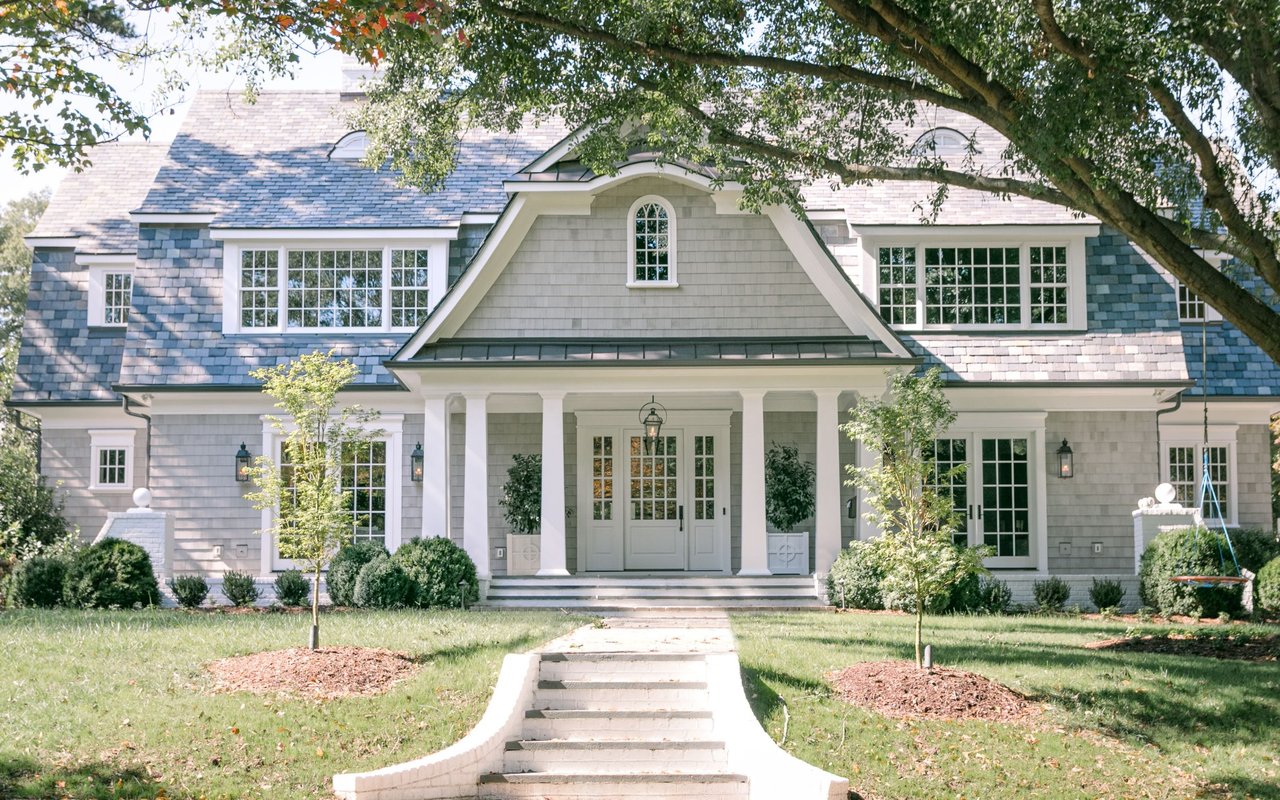
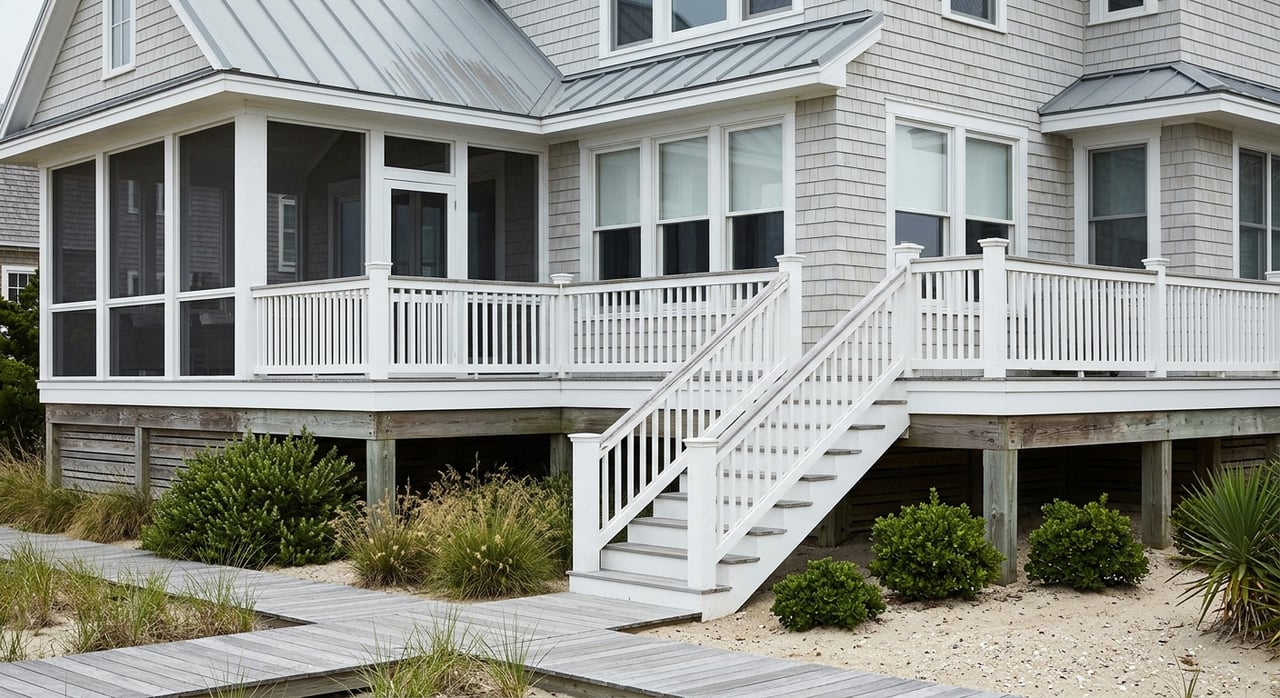
Town documents note that homes near the beaches and sound often place parking below with living space above, while interior homes tend to be more street-oriented. Beachfront and soundfront homes are typically oriented toward the water, with patios and pools integrated into their lots.
For owners, this means the experience of a property often depends not just on whether it is in Duck Village or North Duck, but also on whether it is interior, oceanside, soundside, oceanfront, or soundfront within that broader area.
Which area fits your ownership goals?
If you want easier access to public amenities, a more social setting, and the most walkable part of town, Duck Village is likely the better fit. It offers the clearest connection to the boardwalk, Town Park, village activity, and Duck’s pedestrian-oriented core.
If you prefer a quieter setting with a more residential feel, North Duck may align better with your goals. It often appeals to owners who want a more private day-to-day environment while still being part of Duck.
Here is the simplest way to think about it:
| Area | Ownership feel | Best for |
|---|---|---|
| Duck Village | Walkable, active, amenity-rich | Owners who want to be near town activity and public spaces |
| North Duck | Quieter, more residential, private-road oriented | Owners who prioritize privacy and a neighborhood setting |
Neither choice is universally better. The right fit comes down to how you want to spend your time when you are here and what kind of setting supports your long-term plans.
If you are weighing homes in Duck Village or North Duck, local context matters. A property’s road access, neighborhood layout, and proximity to the spaces you will use most can shape ownership just as much as square footage or view. For tailored guidance on Duck and the northern Outer Banks, connect with Corolla Real Estate.
FAQs
What is the difference between Duck Village and North Duck?
- Duck Village is the town’s walkable commercial and social core, while North Duck is a general local term for the more residential stretch north of the village toward the Sanderling area.
Is North Duck an official area in Duck, NC?
- No. North Duck is not an official town district. It is a practical shorthand for the north-of-village residential area.
Does Duck Village have better beach access than North Duck?
- Not in terms of town-owned public beach access. The Town of Duck says it has no public beach access locations or public parking at beach accesses, so access usually depends on neighborhood or HOA locations.
Is Duck Village more walkable than North Duck?
- Yes. Duck Village is the most pedestrian-oriented part of town, with the Duck Trail, Town Park, Soundside Boardwalk, and Village Commercial area all close together.
What kind of homes are common in Duck Village and North Duck?
- Single-family homes dominate Duck overall. Town data in the FY 2022-23 budget document says 94% of housing units were single-family homes, though the village area also includes some mixed-use and upper-level residential spaces near commercial properties.
Should you buy in Duck Village or North Duck?
- If you want walkability and access to town amenities, Duck Village may fit better. If you want a quieter, more private residential setting, North Duck may be the stronger match.