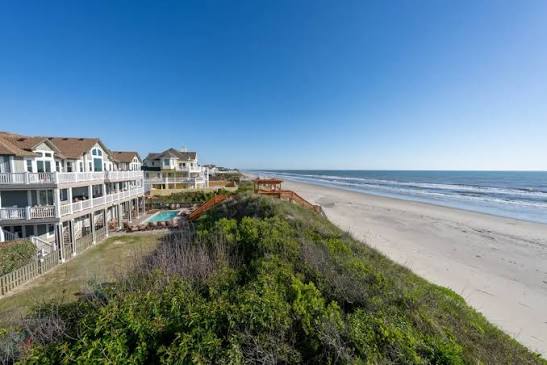
Currituck County Releases Final Beach Management Plan: What It Means for Corolla and the Northern Outer Banks
The beaches of Corolla and the northern Outer Banks are more than a beautiful backdrop for vacation photos. They are an essential part of our local economy, a major attraction for visitors, and an important factor in the desirability of owning property along our coastline.
Recognizing the importance of protecting this valuable resource, Currituck County has released its Final Beach Management Plan, outlining a long-term approach to managing and preserving the county's 22.6 miles of oceanfront beaches and dunes.
Prepared by Coastal Protection Engineering of North Carolina, the plan examines coastal erosion, storm vulnerability, sea-level rise, and potential strategies for maintaining healthy beaches and protecting the communities that depend on them.
So, what does this mean for Corolla, property owners, and the future of our beaches?
A Long-Term Approach to Beach Management
Rather than simply reacting to beach erosion after major storms, the Beach Management Plan takes a more proactive, data-driven approach.
The study considers historical shoreline changes, ongoing beach monitoring, sand volume measurements, and projected coastal conditions. It also evaluates potential management strategies designed to address the different challenges along Currituck County's oceanfront.
The goal is to develop a sustainable approach that recognizes the importance of protecting both the natural coastal environment and the communities that make the Northern Outer Banks such a special place.
Four Areas Identified for Special Attention
One of the most important aspects of the plan is its division of the coastline into four distinct areas, or reaches. Each has different environmental conditions, erosion concerns, and management considerations.
1. Central Reserve/Refuge Reach
This area includes portions of the northern 4WD beaches, including environmentally sensitive areas near the Currituck National Wildlife Refuge and Currituck Banks Estuarine Reserve.
Because of its environmental characteristics and limited development, the earlier engineering analysis explored alternatives such as acquiring and removing threatened structures rather than relying on extensive beach nourishment.
2. North Corolla Reach
Stretching from the Horse Gate south to Seabird Way in Ocean Sands, this section is particularly relevant to Corolla's developed oceanfront communities.
The earlier engineering analysis identified beach nourishment as a strong option for maintaining beach width, protecting the developed coastline, and supporting the area's tourism economy.
3. Spindrift Reach
The Spindrift community presents a more complicated set of coastal management challenges.
Erosion vulnerability, project costs, permitting requirements, and potential environmental impacts all factor into determining which solutions may be practical.
4. South Pine Island Reach
This section includes approximately 3,000 feet of oceanfront in southern Pine Island.
The earlier analysis found that large-scale nourishment and engineered coastal structures could be difficult to justify economically. Smaller-scale approaches, including dune restoration, sand fencing, vegetation, and continued monitoring, were among the alternatives considered.
Together, these four areas demonstrate why a single beach management strategy may not be appropriate for the entire county.
Understanding Beach Erosion and Sand Monitoring
Currituck County has been conducting shoreline monitoring to better understand how its beaches change over time.
The monitoring program examines beach profiles, sand volume, offshore conditions, and historical shoreline movement. This information helps identify areas experiencing erosion and evaluate how conditions may change in the future.
One particularly interesting finding from the 2025 shoreline assessment was that the Corolla area showed an overall gain in sand volume between 2020 and 2025, despite experiencing a substantial loss during the most recent 12-month measurement period.
This is an important reminder that beach conditions can change significantly from year to year. A beach that has gained sand over several years can still experience considerable erosion following storms or changing coastal conditions.
The plan also incorporates monitoring thresholds to help identify when certain areas may need additional attention or management action.
What Strategies Are Being Considered?
Beach management involves more than bringing in additional sand. The plan evaluates several approaches, depending on the conditions and needs of each area.
Potential strategies include:
- Beach nourishment: Adding compatible sand to widen beaches and rebuild protective dunes.
- Dune restoration: Rebuilding and stabilizing dunes through sand placement and natural vegetation.
- Sand fencing: Using fencing to capture windblown sand and encourage dune development.
- Beach vegetation: Planting native beach grass to help stabilize dunes.
- Dune maintenance: Moving existing sand to reinforce dunes when conditions allow.
- Property acquisition: Exploring the purchase and removal of structures in particularly vulnerable areas.
- Engineered coastal solutions: Evaluating structures that may provide additional protection, subject to regulatory and environmental requirements.
Not every strategy is appropriate for every location, and beach nourishment in particular requires ongoing maintenance, funding, and regulatory approval.
The Financial Side of Beach Management
One of the biggest considerations moving forward will be funding.
Beach nourishment and other coastal protection projects can be expensive, and identifying a recommended solution is only part of the process. The County must also determine how projects will be funded and maintained over time.
Historically, Currituck County has discussed potential funding sources including occupancy tax revenue, state and federal grants, and the possibility of a special service district involving property owners in Corolla and the 4WD area.
A special service district could potentially place some of the financial responsibility on property owners within designated areas. However, previous discussions should not be confused with an approved assessment or a finalized funding decision.
How the County ultimately funds its recommended projects will be an important part of the conversation as the plan moves forward.
What Does This Mean for Corolla Homeowners and Real Estate?
For anyone who owns property, is considering purchasing a home, or invests in vacation rentals in Corolla, beach management is an important subject.
Our beaches are one of the primary reasons people visit the Outer Banks year after year. They support our vacation rental industry, contribute to the area's appeal, and play an important role in the overall local economy.
For oceanfront property owners, beach width, dune stability, and long-term erosion concerns are important considerations.
For vacation rental owners, beach conditions can influence the guest experience and the continued desirability of the area as a vacation destination.
And for prospective buyers, understanding the County's approach to coastal management can provide valuable context when evaluating a property and its location.
It's also important to recognize that a beach management plan does not guarantee that every oceanfront property will be protected or that every section of beach will receive nourishment. Coastal management involves balancing environmental considerations, economic realities, regulatory requirements, and the needs of individual communities.
Protecting What Makes the Northern Outer Banks Special
The release of Currituck County's Final Beach Management Plan represents an important step toward a more coordinated and proactive approach to managing our coastline.
There are still questions to be answered, particularly regarding project funding, implementation schedules, permitting, and the specific actions recommended for each section of beach.
But one thing is clear: maintaining healthy beaches is about much more than protecting individual properties. It is about preserving the natural beauty, economic vitality, and coastal lifestyle that make Corolla and the Northern Outer Banks such desirable places to live, work, and vacation.
As these discussions continue, beach management will remain an important issue for homeowners, visitors, local businesses, and everyone who cares about the future of our coastal communities.
At Corolla Real Estate, we believe understanding our local community is just as important as understanding the real estate market. We'll continue following developments that may affect Corolla property owners and the future of our beaches.
Learn More
To review Currituck County's announcement and access the Final Beach Management Plan, visit: